How to determine the service life of K37-20-1.5KW gear reducer after shaft wear repair
To determine the service life of the K37-20-1.5KW gear reducer shaft after wear repair, it is necessary to comprehensively evaluate it from three core dimensions: repair process, operating conditions, and monitoring data. The core logic is to compare the performance parameters of the repaired rear shaft with the new machine standard, and judge the attenuation trend based on the actual operating status. The specific steps are as follows:
1. Evaluate the reliability of the repair process (basic premise)
Repair welding+machining: Suitable for shaft necks with high wear, the weld seam needs to be checked for cracks, hardness and substrate matching (generally HRC28~35), coaxiality ≤ 0.02mm; if the welding stress is not eliminated, secondary cracking is likely to occur, and the service life is greatly shortened.
Electric brush plating/cold spraying: suitable for shaft necks with low wear (0.1~0.5mm), uniform coating thickness (deviation ≤ 0.01mm), bonding strength ≥ 50MPa, and a lifespan close to 60%~80% of new machine shaft necks.
Inlay/hot fit shaft sleeve: suitable for severe wear, the shaft sleeve material should be superior to the substrate (such as 45 steel quenched and tempered), the interference fit should meet the design requirements, and the service life can reach 80% to 100% of the new machine shaft neck.
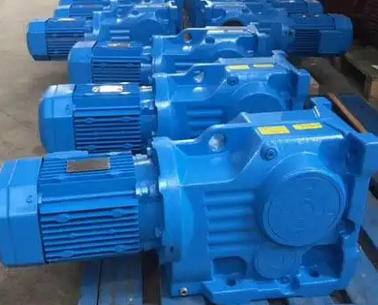
Confirm repair method and quality: The lifespan of different repair processes varies greatly, and it is necessary to verify the key dimensional accuracy, surface hardness, and coaxiality of the repaired rear axle.
Check sealing and fit: The fit clearance between the rear axle neck, bearing inner ring, and oil seal should meet the requirements of the drawing (generally transition fit H7/k6). Excessive clearance can lead to grease leakage, impurity intrusion, and accelerated wear.
2. Calculate theoretical lifespan based on operating conditions
Comparison of rated operating conditions: The rated torque, speed, and load factor of K37-20-1.5KW reducer are the benchmark. If the actual load after repair is ≤ 80% of the rated load and the operating conditions are stable (without frequent start stop/impact), the theoretical service life of the repaired rear axle can reach 50%~80% of that of the new machine; If operated at full load/overload for a long time, the lifespan of the new machine will decrease by 30% to 50%.
Calculate lubrication and environment: The brand, cleanliness, and replacement cycle of lubricating grease/oil directly affect its lifespan; If the original recommended lubricating oil is used, the impurity content is ≤ NAS level 8, and the environment is free of dust/corrosion, the service life can be increased by 20% to 30%; On the contrary, poor lubrication or harsh environment can lead to early wear of the journal and bearings.
Reference manufacturer repair standards: Some manufacturers provide a warranty life (usually 6-12 months) for the repaired shaft, which can be used as a basic reference value.
3. Monitor the operating status to determine the actual lifespan (dynamic verification)
Vibration monitoring: Use a vibration meter to detect the vibration velocity at the output end of the reducer, and the standard for new machines is generally ≤ 2.8mm/s; If the vibration value stabilizes at ≤ 3.5mm/s after repair and there is no obvious upward trend, it indicates that the shaft is running normally; If the vibration value continues to increase (with a weekly increase greater than 0.5mm/s), it is highly likely that the journal wear has recurred or the coaxiality deviation has occurred, and the lifespan will be significantly shortened.