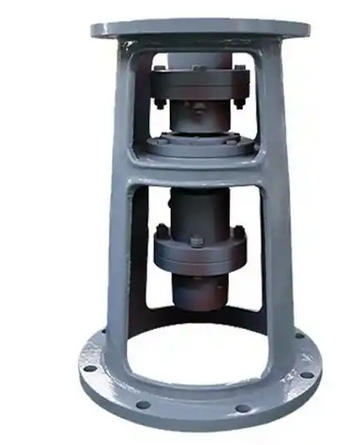
How to determine if the TJA6-B6 gearbox frame is overloaded
To determine whether the TJA6-B6 gearbox frame is overloaded, the main focus is on whether the load exceeds the rated value, while taking into account the operating status and component damage to make a comprehensive judgment. Below, I will help you sort out a few key points:
1、 Whether the load exceeds the limit
Usage factor: If the actual working torque/rated torque is greater than 1.2, or the actual power/rated power is greater than 1.2, and the continuous operation time exceeds 20% of the design life, it is likely to be overloaded.
Short term impact: If the coefficient of use under short-term impact load is greater than 1.5 and component damage has already occurred, it is also considered overload.
2、 Is the operating status abnormal
Vibration and noise: When overloaded, the vibration usually increases significantly, accompanied by low-frequency roar or displacement sensation, with the strongest vibration around the anchor bolts.
Temperature rise: The temperature at the bearing end continues to be high (such as exceeding 85 ℃), and the vibration intensity and temperature rise trend are consistent, which is also a typical manifestation of overload.
3、 Are there any damages to the components
Gear wear: Check for pitting, bonding, or tooth distortion on the gears, which may be caused by overloading.
Bearing damage: Excessive bearing clearance or fatigue damage may also be caused by overloading.
4、 How to further confirm
Refer to the manual: The most direct method is to refer to the technical manual of TJA6-B6 reducer, which will clearly indicate the rated load and overload judgment criteria.
Professional testing: If conditions permit, real-time monitoring can be carried out using devices such as torque sensors and tachometers, or through professional software modeling and analysis.