How to ensure the quality of foundation fixing and leveling of WHX125-40:1 worm gear reducer
When the WHX125-40:1 worm gear reducer operates in high load scenarios such as metallurgy and lifting, the quality of foundation fixation and leveling directly determines the stability, transmission accuracy, and service life of the equipment. If the foundation is unstable or the level exceeds the tolerance, it is highly likely to cause increased vibration, bearing misalignment, seal leakage, and even gear damage. High quality installation must be achieved through systematic control.
1、 Basic preparation: Ensure load-bearing rigidity and stability
Basic material selection
It is recommended to use high-strength concrete (C25 or above) or steel structure platforms to ensure that they can withstand the self weight of the reducer and the impact load during operation, and avoid stress concentration in the box due to foundation settlement or deformation.
Surface flatness control
The flatness error of the installation surface should be ≤ 0.1mm/m. Steel flat washers should be used for leveling, and the use of easily compressible materials such as wooden boards or rubber washers as leveling media is prohibited.
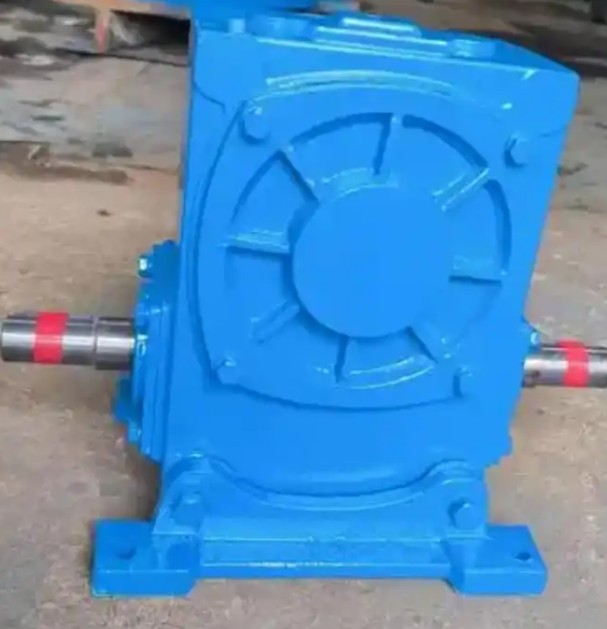
Reserved foundation holes and oil drainage space
The position of the anchor bolt holes should be matched with the reducer base, while ensuring that there is enough operating space below the oil discharge port for later maintenance.
2、 Leveling operation: precise control of levelness
Requirements for measuring tools
Use a frame level with an accuracy of not less than 0.02mm/m, and place it on the input shaft and output shaft end faces for testing to ensure that the axial and radial horizontal errors are both ≤ 0.1mm/m.
Leveling method
After initial positioning, adjust the height of the base by adding or removing steel gaskets.
Use the "cross cross" method to fine tune the diagonal washers to avoid twisting of the shell caused by one-sided force.
Measure again after each adjustment until the readings at all four corners are consistent and meet the standards.
3、 Fixed process: ensuring connection reliability
Bolt tightening specification
Pre tighten for the first time to 30% of the rated torque
Tighten to 70% for the second time
The third time reaching the final tightening torque specified by the manufacturer (usually 300-400N · m)
Use anchor bolts of the specified strength grade (such as M20) and gradually tighten them in three diagonal steps:
Recheck the levelness after tightening to prevent deformation of the box due to overly tight bolts.