When connecting the motor and the ZSY gear reducer, what are the advantages and disadvantages of the high-strength expansion sleeve connection compared with the ordinary flat key connection?
The expansion sleeve connection is superior to ordinary flat key connections in terms of load-bearing capacity, anti vibration performance, and shaft strength protection, making it a better choice for high load, high-precision gearbox systems; The flat key connection structure is simple and cost-effective, suitable for scenarios with low to medium torque and infrequent disassembly and assembly.
1、 Advantages and characteristics of expansion sleeve connection
Without keyway weakening, the strength of the shaft is improved: the expansion sleeve forms an interference fit between the shaft and the hub through conical expansion, relying on friction to transmit torque without the need for keyway opening on the shaft, avoiding stress concentration problems and effectively protecting the integrity of the shaft body.
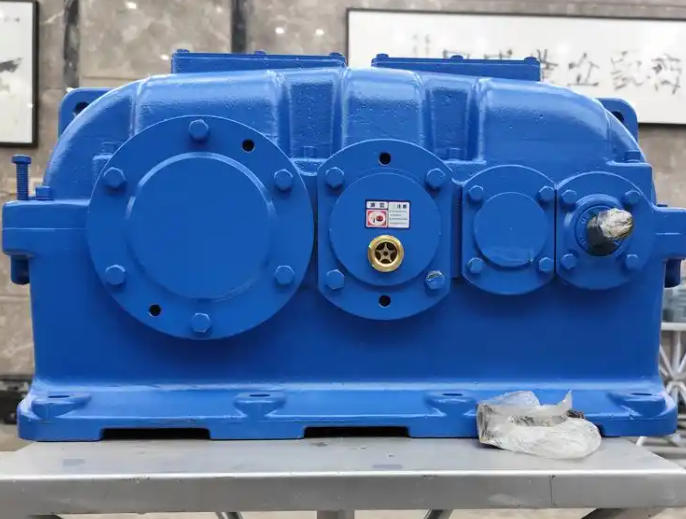
Stronger load-bearing capacity: Compared to flat key connections, the torque transmission capacity of the expansion sleeve can be increased by more than 30%, making it more suitable for high torque and heavy load conditions, such as cranes, rolling mills, and other equipment.
Good anti vibration and anti loosening performance: When used in conjunction with anti loosening washers and thread locking agents, it can effectively prevent connection loosening caused by equipment vibration, suitable for industrial scenarios with long-term continuous operation.
Easy to disassemble and reuse: installation and disassembly can be completed without heating or knocking, with high maintenance efficiency, especially suitable for gearbox systems that require frequent maintenance.
2、 Characteristics and limitations of ordinary flat key connections
Simple structure and low cost: The flat key connection technology is mature, easy to process and assemble, and widely used in general machinery such as conveyors and mixing equipment.
There is a risk of stress concentration: Keyways can weaken the cross-sectional strength of the shaft, especially on large diameter or high-speed shafts, which can easily cause fatigue cracks and affect the service life.
Limited transmission torque: usually suitable for low to medium torque (≤ 1000N · m) scenarios, key shear failure is prone to occur when overloaded.
High precision is required for assembly: the clearance between the key and keyway should be controlled within ≤ 0.1mm, otherwise it may lead to unstable transmission or increased vibration.