How to ensure accurate alignment when installing WHT80-8-I arc cylindrical worm gear reducer
The centering accuracy of WHT80-8-I circular cylindrical worm gear reducer is directly related to the stability of equipment operation, bearing life, and sealing reliability. Especially under high load conditions such as metallurgy and lifting, small deviations may cause vibration, temperature rise, oil leakage, and even gear damage. Strict control must be achieved through scientific methods and professional tools.
1、 Key preparations for the middle front
Cleaning and Inspection
Clean the oil stains, rust, and burrs on the input/output shaft end and coupling inner hole to ensure that there are no foreign objects affecting the coaxiality of the mating surface.
Tool in place
Prepare laser centering instruments or precision dial gauges (laser is recommended for higher accuracy), feeler gauges, torque wrenches, level gauges, etc. It is strictly prohibited to roughly align based solely on visual inspection or straightedge.
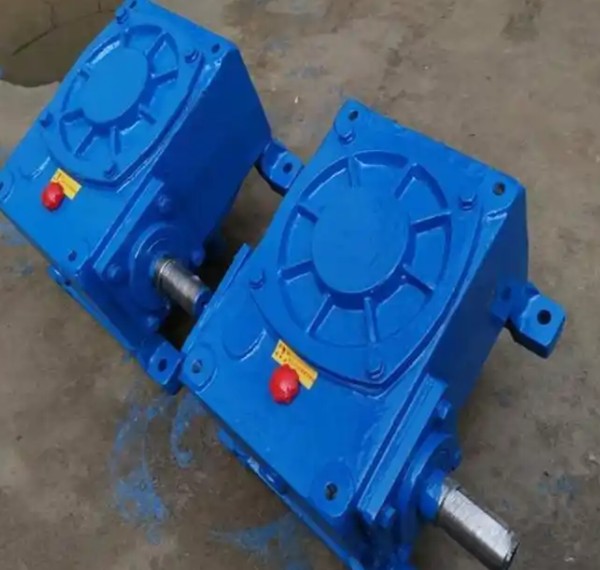
Preliminary positioning
Lift the reducer into place and pre tighten the anchor bolts diagonally, keeping the base in place but leaving room for minor adjustments.
2、 Accurate centering operation steps
Coupling connection
Connect the motor and reducer through an elastic coupling, where the elastic element can absorb slight deviations but still requires high-precision alignment.
Measure radial and axial deviations
Radial deviation ≤ 0.1mm
Axial tilt ≤ 0.2mm/m
(Specific values should refer to the model manual, there may be slight differences among different brands)
Measure the radial runout and end face parallelism of two axes at four positions: 0 °, 90 °, 180 °, and 270 °, respectively, using a laser centering instrument or dial gauge.
Calculate the average deviation to ensure:
Adjust position
Gradually correct the deviation by adding or removing shims to the motor or reducer base, and fine-tuning the movement position until it meets the standard.
3、 Thermal expansion compensation strategy
The operating temperature of the gearbox (usually 80-90 ℃) is higher than that of the motor, and the axis will rise in the hot state. Therefore, compensation should be reserved for cold state centering:
The center of the high-speed shaft of the reducer should be slightly lower than the center of the motor shaft, generally 0.1-0.3mm lower. Please refer to the manufacturer's recommendations for specific values.
Avoid deviation of the "upper opening" caused by thermal expansion after operation, which can exacerbate vibration and bearing load.