What hazards will be caused by abnormal connection between the motor and the ZSY224-56-II gear reducer?
Abnormal connection status between the motor and ZSY224-56-II gear reducer can cause harm from three aspects: damage to equipment components, decreased transmission performance, and upgraded safety risks, as follows:
1. Accelerated damage to core transmission components
Coupling system failure: Inconsistent connections or loose bolts can cause rapid aging and fragmentation of the elastic body of the coupling, and shear fracture of the column pins/bolts under alternating impact loads; In severe cases, it can cause deformation and cracking of the coupling body, resulting in loss of transmission function.
Shaft and bearing damage: Radial/angular deviations can apply additional bending moments to the motor output shaft and gearbox input shaft, causing bending deformation at the shaft ends; At the same time, it will cause the bearing to bear non-uniform loads, fatigue peeling of the raceway, damage to the cage, rapid temperature rise of the bearing, and a reduction in service life of more than 50%.
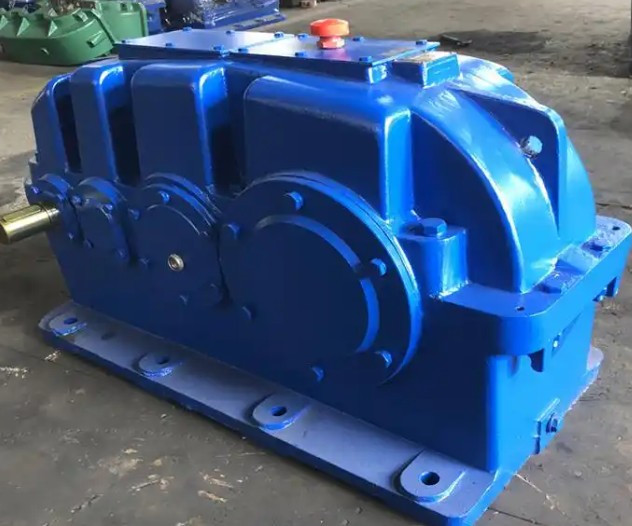
Internal gear damage of reducer: Input shaft bias load will be transmitted to the high-speed gear of the reducer, causing uneven force on the gear meshing surface, resulting in tooth surface pitting, bonding, and root cracks. In severe cases, it can cause gear breakage and directly lead to the scrapping of the reducer.
2. Deterioration of equipment transmission performance
Significant decrease in transmission efficiency: Excessive or non concentric connection gaps can cause impact and friction losses during the transmission process. The comprehensive transmission efficiency of the reducer drops from the rated 96% to 98% to below 85%, manifested by abnormal increase in motor current, increased energy consumption, and decreased equipment load capacity.
Unstable output of speed and torque: Failure of the elastic body or wear of the keyway can cause transmission "slip", resulting in fluctuating output speed of the reducer, with torque fluctuations exceeding 15%, which cannot meet the precise requirements of the production process for speed and torque.
Increased vibration and noise pollution: Abnormal connections can cause equipment resonance, with coupling vibration speeds far exceeding the ISO 10816 standard limit of 2.8mm/s and operating noise exceeding 95dB. This not only affects equipment stability but also pollutes the working environment.
3. Upgrading safety risks and production losses
Equipment shutdown and production interruption: Malfunctions such as broken connecting components and damaged shaft systems can cause sudden equipment shutdown, with repair cycles typically taking several days to weeks, resulting in production line capacity loss; Frequent start stop can also impact the power grid and affect the normal operation of other equipment.
Potential safety hazards: If the coupling protective cover falls off due to severe vibration, the high-speed rotating coupling components may be thrown out, causing casualties; The loosening or breakage of foundation bolts due to vibration can cause equipment to overturn and lead to major safety accidents.
Rapid increase in maintenance costs: Abnormal connections can cause chain component damage, requiring frequent replacement of spare parts such as elastomers, bearings, gears, etc., while also increasing manual maintenance costs, resulting in a 30% to 50% increase in equipment lifecycle operating costs.