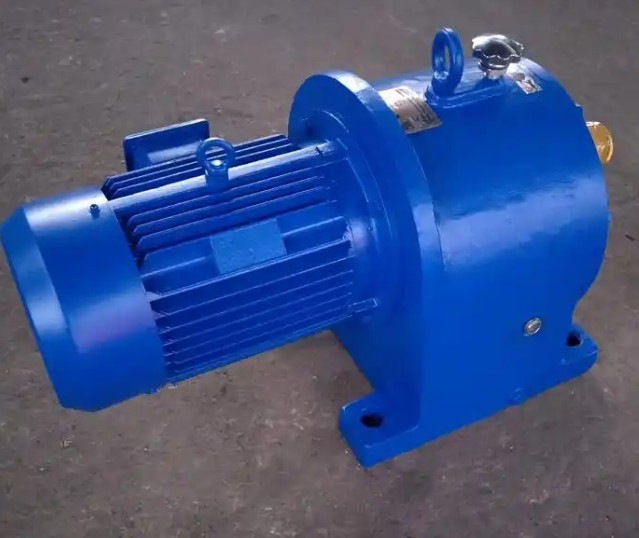
How to regularly check the bearing temperature of TY112-4.5-22KW reducer
The regular inspection of the bearing temperature of TY112-4.5-22KW reducer should be mainly carried out by infrared thermometer detection, supplemented by sensory judgment. A reasonable cycle should be set based on the operating status of the equipment, focusing on the temperature value, temperature rise amplitude, and temperature difference with other parts to ensure that the bearing operates within a safe range.
1、 Recommended inspection frequency
Normal operating conditions: At least one inspection per week
High temperature, high humidity, heavy load or continuous operation environment (such as Wuxi summer workshop): It is recommended to check every 3 days or connect to a real-time temperature monitoring system
First operation after new installation or maintenance: Monitor every 8 hours within the first 72 hours to establish temperature baseline data
2、 Standard temperature limit
Based on multiple industrial standards, the temperature of TY112 series reducer bearings should meet any of the following conditions to be considered abnormal:
The ideal operating range is when the bearing temperature is ≤ 70 ℃
The maximum allowable temperature shall not exceed 80 ℃. If it exceeds this value, a warning shall be issued
The temperature rise (bearing temperature - ambient temperature) should not exceed 40 ℃
If the temperature difference between the bearings on both sides of the same reducer is greater than 15 ℃, it may indicate uneven lubrication or local wear
3、 Specific inspection steps and operation points
Choose the appropriate tool
Prioritize the use of infrared thermometers (recommended measurement range of -20 ℃ to 200 ℃, accuracy ± 1 ℃)
A backup contact thermometer can be used for calibration to avoid relying solely on hand touch for judgment (which poses a risk of burns and is inaccurate)
Determine measurement points
Align the center of the bearing end cap or the exposed area of the outer ring
Avoid interfering parts such as oil stains, paint, and heat sinks
Standardize measurement operations
Measure after 30 minutes of stable operation of the gearbox
The thermometer should be kept perpendicular to the measuring point, and the distance should be controlled according to the distance coefficient of the instrument (such as D: S=10:1)
Measure continuously 3-5 times and take the average to reduce errors
Data recording and comparative analysis
Establish a temperature ledger to record the measurement time, temperature, ambient temperature, and load status for each measurement
Comparing historical baseline data, if it exceeds the normal range of 15-20 ℃, it is judged as abnormal