How to determine if CJY112-250-1.2KW shaft mounted reducer requires additional maintenance
The key to determining whether the CJY112-250-1.2KW shaft mounted reducer requires additional maintenance depends on the working conditions and status. The following is the specific method of judgment:
1、 Additional maintenance judgment under special working conditions
Heavy load/impact load conditions (such as metallurgical and mining equipment):
Lubricating oil replacement cycle: If the equipment is under heavy load conditions, the lubricating oil replacement cycle should be shortened from the usual 6-12 months to 3-4 months. The inner wall and oil passage of the gearbox should be thoroughly cleaned during each oil change to avoid the accumulation of iron filings and impurities that may cause tooth wear.
Tooth surface lubrication protection: Select extreme pressure industrial gear oil (such as L-CKD 220 or 320) and add gear anti-wear agents to enhance the tooth surface bearing capacity and prevent tooth surface adhesion and pitting corrosion.
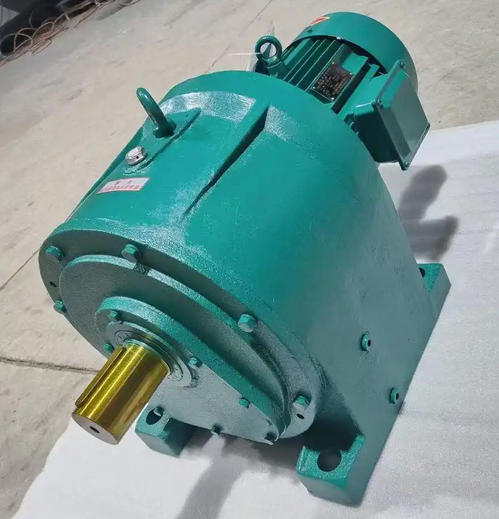
Fastener inspection: Check the connection bolts between the input shaft, output shaft, and coupling, as well as the fastening bolts of the gearbox installation base, every week. Use a torque wrench to tighten them to the standard torque to prevent loosening of bolts and causing shaft displacement.
Tooth contact state detection: Stop the machine every month to check the gear meshing marks, ensure that the contact spots are evenly distributed, and if there is unilateral contact, promptly correct the coaxiality of the shaft system.
High temperature/high dust conditions (such as cement kilns, drying equipment):
Heat dissipation and dust prevention: Install an air-cooled radiator or water-cooled jacket on the gearbox housing to control the oil temperature not exceeding 80 ℃; Install double-layer dust-proof sealing rings and dust covers at the shaft extension end to prevent dust from entering the gearbox and bearing parts.
Seal maintenance: Replace the shaft end seal ring every 2-3 months, using high-temperature resistant fluororubber material seals instead of conventional nitrile rubber seals to avoid high-temperature aging and failure.
Lubricating oil monitoring: Take samples every month to test the viscosity, acid value, and impurity content of the lubricating oil. If the oil shows emulsification, blackening, or excessive impurities, replace it immediately.
Cleaning of the heat dissipation surface of the shell: Use compressed air to blow away dust and oil stains on the surface of the shell every week to ensure the cleanliness of the heat dissipation surface and avoid poor heat dissipation leading to an increase in oil temperature.
3. Low temperature/humid working conditions (such as cold storage, outdoor humid environment):
Lubricating oil selection: Replace with L-CKD low-temperature gear oil (pour point ≤ -25 ℃) to avoid an increase in oil viscosity in low-temperature environments, which may result in insufficient lubrication during start-up.
Moisture and rust prevention measures: Install a desiccant respirator in the gearbox vent hole and replace the desiccant regularly; When the shutdown exceeds 15 days, inject a small amount of anti rust oil into the gearbox or start the gearbox to run without load for 10 minutes to prevent rust on the tooth surface and bearings.
Drainage device inspection: Ensure that the drainage plug at the bottom of the reducer is unobstructed. After each shutdown, unscrew the drainage plug in a timely manner to drain the condensed water in the box and avoid oil emulsification.
Pre start inspection: Before starting at low temperature, manually rotate the gearbox 3-5 times to confirm that there is no jamming during operation, and then turn on the power to start to prevent bearing wear caused by oil solidification.