What are the common modification issues for ZD60 soft tooth surface gear reducers
The most common and high-risk issues in the modification of ZD60 soft tooth surface gear reducers are concentrated in three core dimensions: loss of transmission accuracy, lubrication and heat dissipation failure, and structural strength mismatch.
1、 Pain points and risk analysis of core modification
1. The "matching trap" of changing soft tooth surface to hard tooth surface
This is the most common upgrade requirement aimed at improving load-bearing capacity and lifespan, but improper operation can easily lead to the scrapping of the box.
Problem manifestation: After directly replacing the hard tooth gear, there is a significant increase in noise, vibration, and even box breakage.
Deep reason: Hard tooth gears (HRC58-62) require extremely high installation accuracy, while the rigidity and machining accuracy of the soft tooth box originally designed by ZD60 may not meet the meshing requirements of hard tooth surfaces. If the strength of the box is not rechecked or high-precision grinding treatment is not carried out, small errors on the hard tooth surface will be amplified, leading to pitting or tooth breakage.
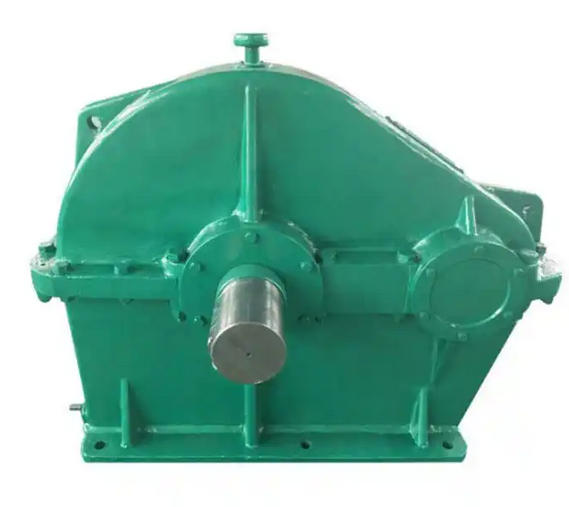
Guidelines for avoiding pitfalls: Before modification, the strength of the box must be calculated, and if necessary, the joint surface of the box must be re scraped or reinforced; At the same time, the new gear pair must undergo precision grinding to ensure that the contact spots are ≥ 50% in the tooth length direction and ≥ 40% in the tooth height direction.
2. The "chain reaction" caused by transmission ratio adjustment
In order to match the new motor speed or load requirements, it is often necessary to adjust the transmission ratio, but this is often simplified as "changing gears".
Problem manifestation: After modification, the motor is overloaded, the bearings are frequently damaged, or the output torque is insufficient.
Deep reason: Changing the transmission ratio means a change in the gear tooth ratio. If the motor power and bearing capacity are not synchronously calculated, it can lead to "small horse pulling big car" or premature fatigue of bearings. In addition, significantly adjusting the transmission ratio may require adding an intermediate stage, which will change the internal spatial layout of the box. If the oil seal and bearing positions are not synchronously adapted, it will cause oil leakage or shaft system jamming.
Avoiding pitfalls guide: Strictly follow the process of "parameter calculation - accessory selection - layout adjustment" to ensure that the motor, bearings, and gears match under new parameters.
3. Lubrication and cooling systems are not suitable for the environment
After modification, the power density is increased, and the original lubrication and cooling system often becomes a weakness.
Problem manifestation: The equipment experiences high oil temperature (exceeding 80 ℃) shortly after operation, rapid deterioration of lubricating oil, and intensified gear wear.
Deep root cause: After modification, the load or speed may change, and the original lubricating oil grade may no longer be suitable (such as insufficient viscosity), or the oil volume may be insufficient. At the same time, if a cooling fan is not installed or the oil circuit is not improved, heat cannot be dissipated in a timely manner, resulting in the rupture of the lubricating film and causing adhesive wear.
Guide to avoiding pitfalls: Choose lubricating oil again according to the modified working conditions (usually upgraded to medium or heavy load industrial gear oil), and check the oil level; For high temperature conditions, it is recommended to install a forced cooling fan or cooler.