How to determine if KAF167R97-Y11KW-479 reducer is overloaded
To determine whether the KAF167R97-Y11KW-479 reducer is overloaded, it is necessary to combine equipment parameters, operating status, and three-dimensional detection data. Accurate judgment can be achieved through the process of "intuitive observation+instrument measurement+logic verification". The following are 5 core judgment methods, each of which includes operating points, judgment criteria, and practical guidance:
1. Quantitative judgment based on motor current and power (the most direct core method)
The matching motor power of KAF167R97-Y11KW-479 is 11kW. The rated current of the motor needs to be clarified first (three-phase asynchronous motors are usually around 22A, subject to the motor nameplate), and overload can be determined through real-time monitoring of current and power.
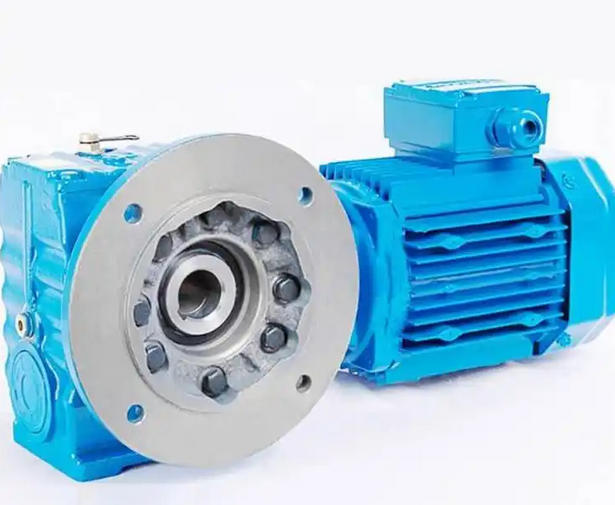
Operation points: Use a clamp ammeter to measure the three-phase current at the input end of the motor, and record the current values under no-load, rated load, and actual working conditions; If equipped with a power meter, it can directly read the input power.
Judgment criteria: ① If the actual operating current continuously exceeds 110% of the rated current (i.e. ≥ 24.2A) for more than 10 minutes, it can be judged as mild overload; ② If the current exceeds 120% of the rated current (≥ 26.4A), or the input power continues to exceed 11kW × 1.1=12.1kW, it belongs to moderate overload; ③ A sudden increase in current to over 130% of the rated value (≥ 28.6A) or a power exceeding 13.2kW is considered severe overload.
Practical guidance: It is necessary to eliminate interference factors such as voltage fluctuations in the power grid (within ± 5% is normal) and motor phase loss operation; If the no-load current is normal (usually 30% -50% of the rated current), and the current rises sharply and remains high after loading, it can be confirmed that the gearbox side is overloaded (such as load jamming or excessive transmission resistance).
2. Verification of matching between output torque and load torque (essential judgment method)
The core of gearbox overload is that the actual output torque exceeds the rated output torque, which needs to be reverse deduced through parameter calculation and load verification.
Firstly, clarify the key parameters of the equipment: the "97" of KAF167R97 is the reduction ratio (i=97), the rated speed of the motor n ₁ ≈ 1480r/min, the rated torque of the motor T ₁=9550 × P/n ₁=9550 × 11/1480 ≈ 70.5N · m, and the rated output torque of the reducer T ₂=T ₁ × i × η (where η is the transmission efficiency and hard tooth surface reducer η ≈ 0.94-0.96). The calculated T ₂ ≈ 70.5 × 97 × 0.95 ≈ 6570N · m (approximately 664kgf · m)