How to determine if the output shaft of BWD1-29-1.5KW cycloidal pinwheel reducer is worn
The core basis for determining whether the output shaft of the BWD1-29-1.5KW cycloidal pinwheel reducer is worn is the abnormal vibration and noise during operation, as well as the radial runout of the shaft neck measured after shutdown. If the device produces periodic "clunking" sounds or significantly increases the amplitude of output vibration under load, it usually means that the journal or bearing position has worn out.
1、 Preliminary auscultation and palpation during operation
Capturing wear signals through sensory and simple instruments without disassembling the equipment is the most efficient first step.
Characteristic of abnormal noise: Start the gearbox and carefully distinguish the sound at the output end.
If you hear a regular "clang" sound or impact sound, and the frequency changes with the speed, it is usually caused by the wear of the shaft neck leading to an increase in bearing clearance, and the impact of the ball on the raceway.
If there is a high-frequency sharp "squeaking" sound, it may be due to the loose fit of the bearing after the journal is worn, resulting in the rupture of the lubricating film and direct friction of the metal.
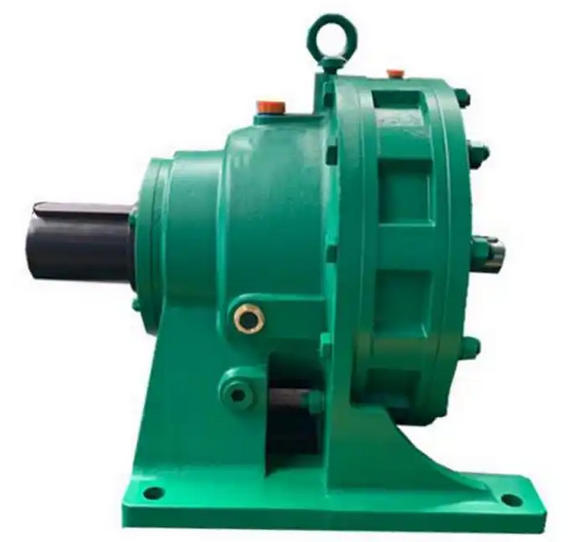
Attention: It is necessary to distinguish the uniform "buzzing" sound of gear meshing, as wear noise is usually more harsh and accompanied by a sense of rhythm.
Measure vibration and temperature:
Vibration monitoring: Gently touch the output shaft bearing seat with the back of your hand (pay attention to safety). If you feel obvious periodic shaking or use a vibration measuring pen to measure a radial vibration speed exceeding 4.5mm/s, it is highly suspected that the bearing position or shaft neck has been worn.
Temperature investigation: Wear will exacerbate friction and heat generation. If the temperature of the bearing seat at the output end is higher than that during normal operation by more than 15 ℃, or exceeds 80 ℃ (when the ambient temperature is ≤ 40 ℃), it is often a sign of wear and failure of the fit.
2、 Static precise measurement after shutdown
If the operating status is abnormal, it is necessary to shut down and cut off the power, and use professional measuring tools for quantitative judgment, which is the key to diagnosis.
Radial runout measurement (core indicator):
Place the dial gauge head vertically on the surface of the output shaft neck (where bearings or seals are installed).
Slowly rotate the output shaft and observe the change in the reading on the dial gauge.
Judgment criteria: If the radial runout exceeds 0.05mm, it can be determined that the journal has obvious wear or bending deformation and needs to be repaired or replaced.
Appearance and coordination inspection:
Visual inspection: Observe whether there are obvious scratches, pits, step like wear (commonly known as "ridges") on the surface of the shaft neck, or whether there is metal accumulation caused by relative sliding.
Keyway inspection: The BWD1 series often transmits torque through key connections. Check whether the two sides of the keyway have been compressed and deformed, and whether there are "bell mouths" or cracks, which are common forms of shaft head wear.
Bearing fit: If the bearing has been disassembled, check the mating surface between the journal and the inner ring of the bearing. If it is found that the inner ring of the bearing can easily slide on the shaft, or there are bright friction marks left on the surface of the shaft neck due to "running the inner ring", it indicates that the size of the shaft neck has decreased due to wear, and the interference fit is insufficient.