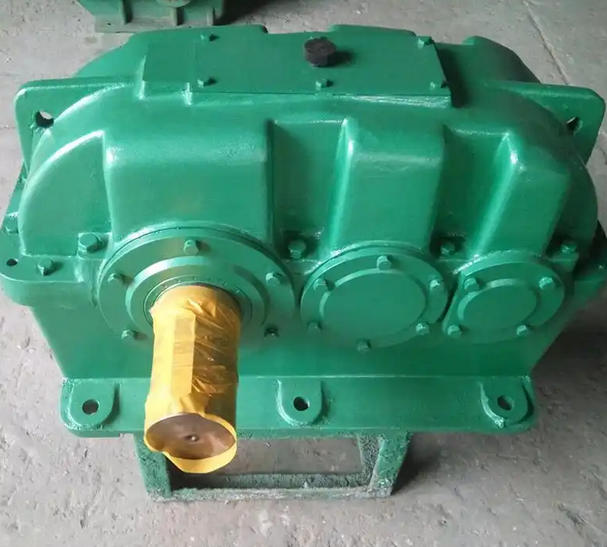
What is the impact of pitting corrosion fault on ZLY250-6.3-ll reducer gears
Pitting corrosion faults can significantly reduce the load-bearing capacity and service life of ZLY250-6.3-II gearbox gears. If not dealt with in a timely manner, it will cause increased vibration, noise, and even serious consequences such as tooth surface peeling or tooth breakage.
1、 The main impact of pitting corrosion on the gears of ZLY250-6.3-II reducer
1. Decreased transmission performance
In the early stage of pitting corrosion, small pits appear on the tooth surface (mostly concentrated in the lower part of the pitch circle). As the crack propagates, the area of metal peeling increases, which damages the accuracy of the tooth profile and leads to unstable meshing, resulting in an increase in dynamic load and transmission error.
2. Increased vibration and noise
The uneven tooth surface causes impact on the gear during operation, resulting in a significant increase in high-frequency vibration. Abnormal spectral characteristics can be monitored through vibration sensors to assist in fault diagnosis.
3. Deterioration of lubrication system
The metal debris generated by pitting corrosion will mix with lubricating oil, causing oil contamination and further exacerbating abrasive wear. Regular sampling and analysis of metal particle content in oil can effectively predict the degree of pitting corrosion development.
4. Chain component damage
After gear failure, the load is transferred to the bearings and housing, which can easily cause bearing fatigue damage, shaft displacement, or housing deformation, forming a "fault chain" effect and expanding the scope of maintenance.
5. Reduced equipment reliability
According to the port machinery maintenance standards, when the pitting area reaches 30% of the meshing surface and the depth reaches 10% of the original tooth thickness, the gear should be replaced; If it exceeds 60%, it must be scrapped.
2、 Response suggestion: Collaborative optimization from three aspects: materials, lubrication, and working conditions
1. Improve the hardness and smoothness of the tooth surface
Select high-quality alloy steel such as 20CrMnTi, undergo carburizing and quenching treatment to achieve a tooth surface hardness of HRC58-62, and control the tooth surface roughness Ra ≤ 3.2 μ m to reduce stress concentration.
2. Optimize lubrication management
Use L-CKD grade extreme pressure gear oil (such as N320 or N460) to ensure that the oil film strength is sufficient to resist high contact stress; Replace the lubricating oil and clean the oil tank every 2000-3000 hours.
3. Control operating conditions
To avoid overloading operation (recommended load not exceeding 1.2 times the rated value) and frequent start stop, install torque limiters to buffer impact loads.
4. Strengthen status monitoring
Install vibration and temperature sensors to monitor the real-time operation status of the gearbox; Combining oil analysis to achieve early warning of faults.