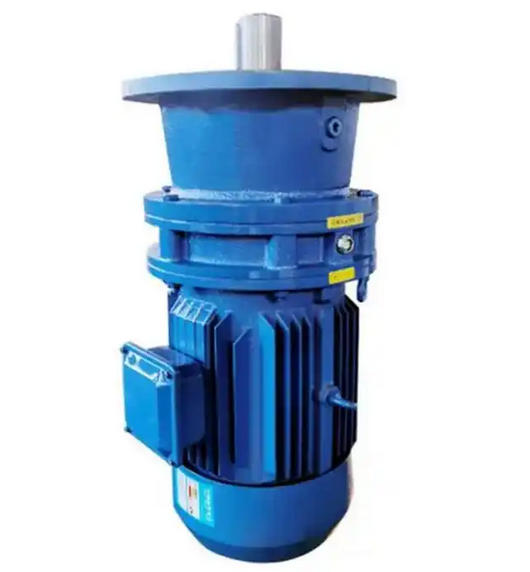
How to detect cracks in XLD8095-11-0.55KW cycloidal pinwheel reducer
The method for detecting cracks in XLD8095-11-0.55KW cycloidal pinwheel reducer is as follows:
Surface inspection technology
Penetration method: After cleaning the surface of the shaft, apply penetrant, and after wiping, the developer shows crack marks, which is suitable for surface opening cracks.
Magnetic powder method: After magnetizing the axis, magnetic powder is scattered, and visible linear traces are formed by adsorbing the magnetic powder at the crack, which is suitable for ferromagnetic materials.
Eddy current testing: By detecting cracks through changes in coil impedance, depth can be quantitatively analyzed, and it is suitable for regular surfaces such as shaft necks.
Internal crack detection
Radiographic testing: using X/gamma rays to penetrate the axis, film or digital imaging to display internal cracks, requires professional equipment.
Auxiliary judgment of operating status
Vibration monitoring: Cracks cause a decrease in shaft stiffness and a sudden increase in high-frequency components in the vibration spectrum (such as 1-3 times the rotational frequency).
Oil analysis: There is an increase in metal debris in the lubricating oil, which may be caused by the propagation of shaft cracks.
Operation suggestion: Priority should be given to using magnetic particle method (rapid positioning of surface cracks), combined with vibration monitoring (dynamic evaluation). Complex structures or internal cracks need to be confirmed by radiographic testing.