What are the common installation stiffness adjustment errors for DCY180-25-1N gear reducers
The installation stiffness adjustment error of DCY180-25-1N (hard tooth surface, three-stage, vertical axis, reverse check type) gear reducer is mainly focused on six categories: foundation/base, fastening, centering, connection, box and support, and resonance, which directly leads to vibration, unbalanced load, temperature rise, tooth breakage, and bearing failure.
1、 Foundation and base stiffness errors (most common)
Insufficient basic strength/stiffness: The concrete foundation is too thin, cracked, and hollow; Poor rigidity of steel frame/platform, no reinforcement bars; Overall shaking and resonance during operation.
Poor installation surface accuracy: the flatness and levelness of the base/foundation exceed the tolerance (>0.1mm/m); Partial suspension and insufficient contact; Excessive/thin gaskets and soft materials (such as rubber pads) can cause elastic deformation.
Base/frame deformation: welding/casting defects on the base, warping after being subjected to stress; Rust on the installation surface and uncleaned debris; Resulting in false rigidity after fixation.
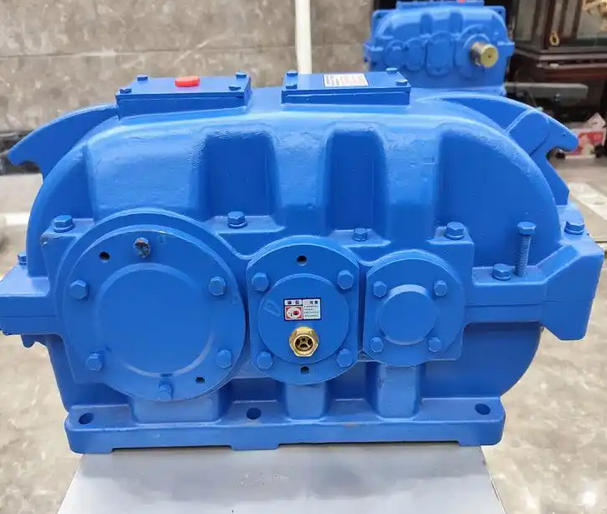
2、 Tightening and bolt errors (directly affecting stiffness)
Anchor bolt problem: insufficient quantity and small specifications; Not tightened evenly with torque (too loose/too tight); No anti loosening (spring pad, thread glue); Long term vibration looseness, elongation, and fracture.
Bolt tightening process error: single tightening, disorderly sequence; Not divided into stages (initial tightening/re tightening/final tightening); Causing local stress concentration and deformation of the base.
Failure of connecting bolts: Loose bolts between the box body, base, and motor flange; The clearance between the stop fitting is too large; Relative displacement occurs when transmitting torque.
3、 Axis alignment and connection stiffness error
Serious coaxiality/parallelism deviation: radial/end face runout>0.05mm; forced hard coupling; Generate additional bending moments and radial forces, resulting in bearing eccentric wear and gear eccentric load.
Coupling selection/installation error: using a low rigidity coupling (such as an oversized elastic block); Failure to pre tighten as required; The connection gap is too large; Weaken the overall stiffness of the system.
Insufficient shaft support: Input/output shaft cantilever is too long; No intermediate support; Bending of the shaft and misalignment of gear meshing during operation.
4、 Box and internal support stiffness error
Insufficient rigidity of the box: casting defects, insufficient wall thickness, and missing reinforcing ribs; Deformation of the casing and offset of the gear axis during operation.
Bearing installation/pre tightening error: bearing clearance is too large/too small; Failure to pre tighten as required; Insufficient support stiffness and shaft shaking; The gear meshing is unstable.
Loose internal connectors: loose bearing end caps, locating pins, and gear locking nuts; Run with jumping and impact.