What impact does the gear parameter selection of ZS65 soft tooth surface reducer have on the noise level of the equipment
The gear parameters of ZS65 soft tooth surface reducer directly determine the smoothness and impact degree of gear meshing, which in turn has a significant impact on the equipment noise level. The core influencing parameters and functions are as follows:
1. Modulus and number of teeth
(1) The larger the modulus, the thicker the gear teeth and the stronger the tooth root. However, as the diameter of the tooth tip circle increases, the linear velocity and impact during meshing also increase, which can easily improve the medium and high frequency noise; If the modulus is too small, the tooth root is prone to stress concentration, and elastic deformation is likely to occur during the meshing process, causing vibration noise.
(2) An increase in the number of teeth can improve the meshing coincidence of gears, reduce the load borne by a single tooth, minimize meshing impact, ensure smoother operation, and effectively reduce noise; Too few teeth can lead to low overlap, discontinuous meshing process, and increased impact and vibration. For ZS65 gearbox, it is recommended that the number of teeth on the small gear be no less than 18 to avoid root cutting while ensuring smooth meshing.
2. Tooth profile angle
The commonly used standard tooth profile angle is 20 °. If the tooth profile angle increases, the gear tooth tip becomes sharper, the tooth root becomes thicker, and the normal force during meshing increases, which will increase the meshing impact noise; The tooth profile angle is too small, and the tooth root strength is insufficient, which can easily cause deformation and wear, leading to vibration noise. ZS65 soft tooth surface reducer prioritizes the use of a 20 ° standard tooth profile angle, balancing strength and noise reduction requirements.
3. Coincidence degree
The coincidence degree refers to the number of gears that participate in meshing simultaneously. The larger the coincidence degree, the smoother the meshing process, the smaller the fluctuation of single tooth load, and the lower the noise. By increasing the number of teeth and optimizing the tooth crest height coefficient, the coincidence degree can be improved. When designing the ZS65 reducer, it is necessary to ensure that the coincidence degree is ≥ 1.2 to reduce the noise generated by meshing impact.
4. Spiral angle (helical gear)
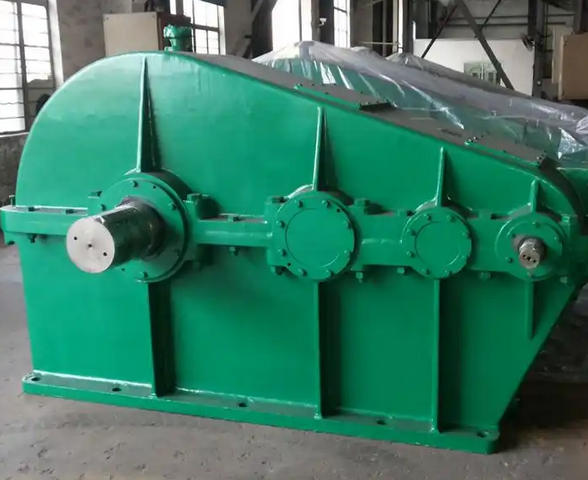
ZS65 reducers often use helical gear structures, and the size of the helix angle directly affects the smoothness of meshing. The increase in helix angle significantly improves the degree of coincidence, and the gear meshing is a progressive contact, resulting in a significant reduction in impact and vibration, and a corresponding decrease in noise; But if the helix angle is too large, it will generate a large axial force, increase the friction and vibration noise of the bearing. Usually, the helix angle of ZS65 soft tooth helical gears is selected as 8 ° -15 ° to balance the noise reduction effect and axial load.
5. Tooth crest height coefficient
As the tooth crest height coefficient increases, the gear tooth crest becomes higher, and the impact of cutting in and out during meshing increases, which can easily generate high-frequency noise; The tooth crest height coefficient is too small, resulting in reduced overlap and decreased meshing stability. ZS65 soft tooth surface reducer generally adopts a tooth crest height coefficient of 0.8-1.0, which balances meshing smoothness and tooth crest strength.
6. Gear accuracy grade
The commonly used precision level for soft tooth surface gears is 8-9 levels (GB/T 10095). The higher the precision level, the smaller the pitch deviation, profile deviation, and helix deviation of the gear, the higher the contact accuracy during meshing, and the lower the vibration and noise. If the accuracy level is too low, gear meshing is prone to biased load and impact, and noise will significantly increase. If the ZS65 reducer has high noise requirements, the gear accuracy can be improved to level 7 (soft tooth surface precision machining).