How to choose the current and voltage when welding the NGWD42-16-2.2 planetary reducer frame made of cast iron
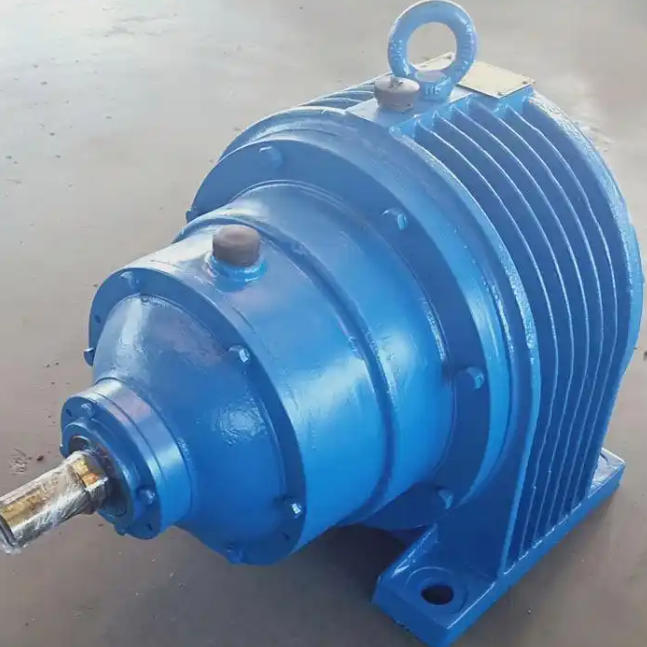
The NGWD42-16-2.2 planetary gearbox base needs to bear the torque reaction force during operation, and it is required to have sufficient rigidity and crack resistance after welding. Its cast iron material is mostly gray cast iron (HT200/HT250) or ductile iron (mainstream compatible model material). The core principle of welding is to control heat input and reduce stress cracks. The selection of current and voltage needs to be determined comprehensively based on the welding method, welding rod/wire specifications, and base material characteristics. The specific plan is as follows:
1、 Core premise: Matching welding methods and welding materials
Manual arc welding is preferred for machine base welding (balancing strength and operability), and argon arc welding can be used for special scenarios (repairing minor defects). Gas shielded welding is not recommended (insufficient strength); The selection of welding materials directly determines the parameter range, and the specific adaptation is as follows:
Conventional repair/non stress areas: Use J506 welding rod (requires preheating at around 600 ℃+post weld insulation) or Z308 pure nickel welding rod (with good crack resistance);
Important stress areas/high-strength requirements: Use WEWELDING777 special cast iron welding rods (cold welding process, no preheating and insulation required) or CARBOWARD series cast iron welding rods (such as CARBOWARD 100/31, suitable for various types of cast iron);
Minor defects (porosity/wear): WEWELDING777TIG argon arc welding wire is used in combination with argon arc welding for construction.
2、 Scenario specific current and voltage parameters (mainly manual arc welding)
(1) Cold welding process (recommended first, suitable for important machine bases, reducing deformation and cracking)
Suitable for crack resistant welding rods such as WEWELDING777, Z308, and CARBOWARD 100, with core parameters of "low current, low voltage, short arc", as follows:
Welding rod diameter of 2.4mm: current 60-100A, voltage 14-17V, suitable for thin machine base or repair welding;
Welding rod diameter of φ 3.2mm (most commonly used): current of 85-110A, voltage of 16-19V, suitable for welding the main body of the machine base, balancing penetration depth and stress control;
Welding rod diameter of 4.0mm: current 90-140A, voltage 18-21V, suitable for thick walled machine base (requires segmented welding).
(2) Hot welding process (suitable for conventional repairs, non core stress areas)
Suitable for ordinary welding rods such as J506, it needs to be preheated to around 600 ℃ first, with slightly higher parameters than cold welding, as follows:
Welding rod diameter of 3.2mm: current of 100-120A, voltage of 17-20V;
Welding rod diameter of 4.0mm: current 130-150A, voltage 19-22V;
Note: After hot welding, it is necessary to immediately cover with asbestos cloth for slow cooling to avoid cracking caused by sudden cooling.