What factors should be considered when choosing a gearbox
The core considerations for selecting a reducer are as follows:
1、 Basic parameters of working conditions and power
Power&Torque: Match the rated power of the motor, calculate the actual output torque (starting/heavy load peak torque priority), and reserve a safety factor of 1.2-1.5 times; Avoid being unable to move with low torque and breaking the shaft due to overload with high torque.
Speed ratio: Determine the input speed and required output speed, accurately calculate the transmission ratio, and balance efficiency and smooth operation.
Load characteristics: distinguish between steady loads (conveyor), impact loads (crusher/mixer), and alternating loads, and choose thicker tooth surfaces and reinforced models for impact conditions.
2、 Equipment installation and structural adaptation
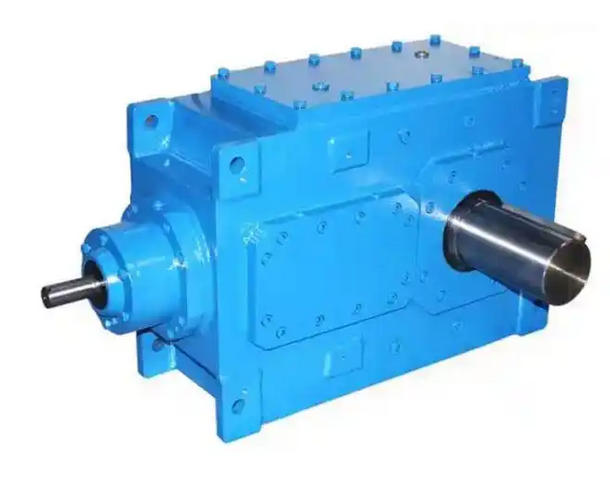
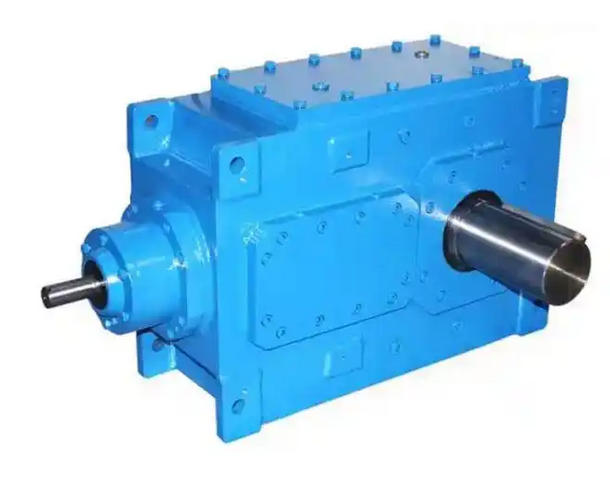
Installation form: flange vertical/horizontal, shaft mounted, hollow shaft/solid shaft, key connection/expansion sleeve, suitable for on-site rack space.
External dimensions: center height, total length, inlet and outlet shaft diameter, ensuring no interference during on-site assembly, and compatible couplings/sprockets.
Steering requirement: Confirm the input and output rotation direction to meet the equipment operation process.
3、 Environmental usage conditions
Temperature and humidity: Choose high-temperature resistant lubricating oil and strengthen heat dissipation for high temperature environments; Low temperature requires antifreeze oil and preheating for start-up.
Dust/Corrosion/Waterproof: For mining, chemical, and humid environments, choose sealed reinforcement, anti-corrosion coatings, and protection levels above IP54/IP65.
Altitude: Poor heat dissipation in high-altitude areas, requiring reduced capacity or increased model size.
4、 Performance and durability requirements
Gear accuracy and material: Hard tooth surface reducer is preferred for long-term operation under heavy load (wear-resistant, long service life); Soft tooth surfaces can be used during light load intervals.
Transmission efficiency: multi-stage deceleration, low efficiency of worm gear and worm gear; Spiral gears and planetary reducers have higher efficiency, and gear types are preferred for energy conservation.
Noise and vibration: Precision machining and gear grinding machines have low noise levels, making them suitable for the quiet needs of factories and light industries.
5、 Lubrication, maintenance, and lifespan
Lubrication methods: oil bath lubrication, splash lubrication, forced oil pump lubrication, and forced lubrication for high-speed/high-power applications.
Convenience of maintenance: Oil filling port, oil drain port, observation window position, easy oil change, easy maintenance priority.
Design lifespan: Conventional equipment is selected for 10 years/20000 hours, and continuous 24-hour operation requires upgrading bearings and optimizing tooth surfaces.
6、 Cost and compatibility with supporting facilities
Cost effectiveness: Consider both purchase price and post maintenance costs, do not blindly choose low-priced and low-end configurations.
Universality of accessories: Bearings, oil seals, and gears are easy to purchase and convenient for later maintenance and replacement.
Standard compliance: Matching with national/industry standards, compatible with motor, coupling, pulley and other accessories.