What are the effects of operating conditions on the heat dissipation of KAF107-Y18.5KW-49.20-M6 gear reducer
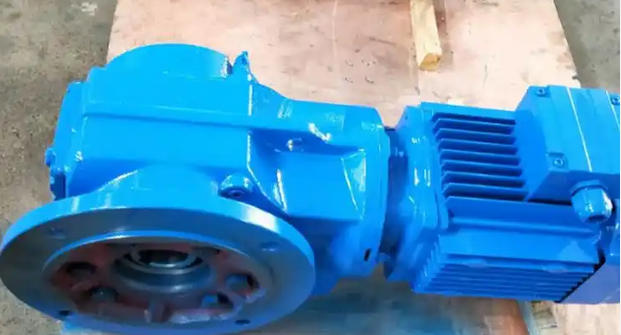
The carrying capacity of the cooling system of KAF107-Y18.5KW-49.20-M6 gear reducer (18.5kW high power, reduction ratio of 49.2, output speed of about 28.4rpm) is directly and strongly related to the operating conditions. The fluctuation of operating parameters will affect the cooling effect through three core paths: total heat generation, heat accumulation rate, and heat dissipation structure adaptability. The following are 5 key impact dimensions, each of which is explained in detail based on device characteristics and practical scenarios:
1. Load intensity and duration of operation: core factors determining total heat generation
The total heat generated by gear meshing and bearing friction under rated load of this model of reducer is close to the natural heat dissipation limit (usually using shell heat dissipation ribs+optional forced cooling fan), and the impact of load fluctuations on heat dissipation is nonlinearly amplified:
Overload operation impact: When the rated load exceeds 110% for a long time (such as material jamming, output end overload, frequent impact load), the gear meshing stress increases by more than 30%, and the total frictional heat generation increases by 40% -60%, far exceeding the designed load-bearing capacity of the heat dissipation system. For example, frequent blockage of conveying equipment can cause long-term overload of the reducer, and the temperature of the housing will quickly rise from the normal 65 ℃ to above 90 ℃. The lubricating oil temperature will exceed 75 ℃, accelerating oil oxidation and component wear, forming a "heating intensification heat dissipation insufficient fault cycle".
Continuous operation time impact: When 18.5kW high-power equipment runs continuously for 24 hours, heat will continue to accumulate in the housing and oil chamber. If a forced cooling fan is not configured, the natural cooling rate cannot match the heating rate, resulting in a slow temperature rise (5-8 ℃ rise every 8 hours). Intermittent operation (working for 2 hours and stopping for 30 minutes) can fully dissipate heat and reduce heat dissipation pressure by more than 60%.
Practice tip: By monitoring the motor current (using a clamp meter to measure the operating current, which should be ≤ 1.1 times the rated current of 35.5A), the load status can be quickly determined, avoiding heat dissipation failure caused by overload.
2. Start stop frequency and impact load: exacerbating instantaneous heat accumulation
Frequent start stop and impact loads can cause the internal heating of the gearbox to show a "pulse like growth", making it difficult for the cooling system to respond quickly:
Frequent start stop effects: When this model of reducer is started, the gear meshing surface is in a boundary lubrication state, and the friction coefficient at the moment of start is 2-3 times that of stable operation. The heat generated during a single start is equivalent to the heat generated during 10 minutes of normal operation. If there are more than one start stop per minute (such as high-frequency switching conditions in automated production lines), heat will not be effectively dissipated during the start-up gap, resulting in a 3-5 ℃ increase in shell temperature after each start-up, and the temperature will exceed the standard (exceeding 85 ℃) after one hour of accumulation.