How to avoid welding deformation when repairing cracking of NGW92-4 reducer base by welding
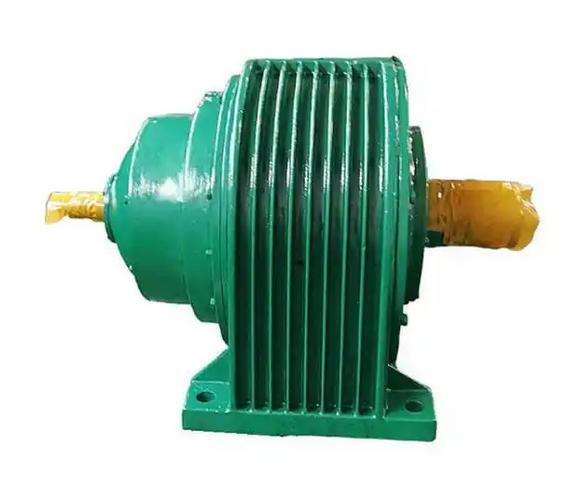
When welding and repairing rigid structural components such as the NGW92-4 gearbox base, the key to controlling welding deformation lies in "prevention first, correction as a supplement", especially when repairing cracked parts, it is necessary to balance strength recovery and geometric accuracy. Based on the structural characteristics of this type of heavy-duty machine base (thick plate, box structure, multiple welds), the following are systematic response strategies:
1、 Design and Process Optimization: Reducing Deformation Trends from the Source
1. Reasonably design the repair welding area and groove form
Using bilateral symmetrical grooves instead of unilateral grooves reduces the concentration of heat input on one side and lowers the risk of angular deformation.
Control the cross-sectional area of the weld seam, avoid excessive welding, follow the principle of "small weld foot size, intermittent welding", and meet the strength requirements.
2. Choose low heat input welding process
It is recommended to use melting electrode gas shielded welding (MAG) or pulse TIG welding to achieve high deposition rate, fast welding speed, reduce line energy input, and minimize the heat affected zone.
Welding parameter suggestions: low current, high welding speed, short arc, control interlayer temperature ≤ 150 ℃ to prevent heat accumulation.
2、 Assembly and welding sequence control: balancing thermal stress distribution
1. Adopting symmetrical welding and segmented back welding method
If the crack is long, it should be welded back in sections in reverse (welding from the end of the crack to the starting end) to gradually release heat and avoid stress concentration.
When performing multiple welding operations, symmetrically arrange welding points and perform synchronous welding to ensure a uniform thermal field and counteract deformation trends.
2. Prioritize welding seams with large shrinkage
During the repair process, if multiple weld seams are involved, the deep and internal weld seams should be welded first to allow them to contract in a free state and reduce subsequent constraint stress.