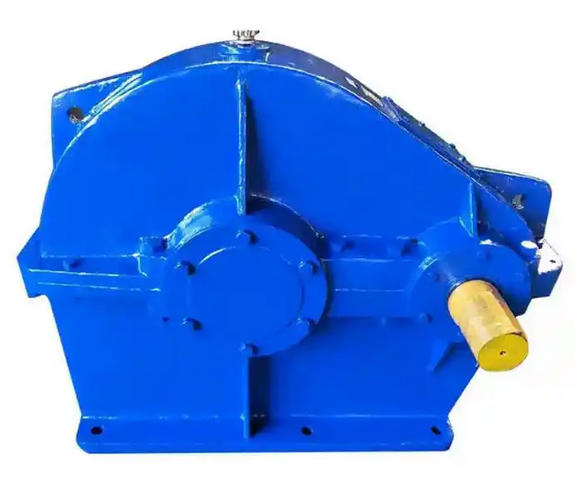
What is the amount of gear wear that needs to be replaced for the ZD80-9-11 gear reducer
The gear wear replacement standard for ZD80-9-11 gear reducer needs to be comprehensively judged based on equipment type, gear position, and working conditions. Usually, when the tooth thickness wear reaches 15% to 25% of the original thickness, it should be replaced.
According to general industrial standards and equipment safety requirements, whether to replace gears depends not only on the amount of wear, but also on the position of the shaft, the usage environment, and the importance of bearing capacity
1. Divided by the axis position of the gear (applicable to general reducer standards):
The first shaft (input shaft) gear should be replaced when the wear exceeds 15% of the original tooth thickness;
Other shaft gears should be replaced when the wear exceeds 25% of the original tooth thickness.
2. Stricter standards under special working conditions:
If the reducer is used for a lifting mechanism (such as a crane), the first shaft gear needs to be replaced if it wears out more than 10%, and the remaining shafts should be replaced if it wears out 20%;
If used for lifting equipment with high temperature, corrosive or hazardous materials, the above standards must be halved.
3. Unrepairable serious damage (must be replaced immediately):
Cracks or broken teeth appear;
The pitting area exceeds 30% of the total tooth surface area and the depth exceeds 10% of the tooth thickness;
Serious peeling, adhesion (bonding) or plastic deformation occurs on the tooth surface.
4. Auxiliary judgment criteria:
Abnormal vibration and noise: If the vibration value continues to exceed 4.5mm/s, it may indicate moderate gear wear;
The presence of a large amount of metal shavings (>0.5mm) in the lubricating oil also indicates severe internal wear.