What are the consequences of the installation accuracy of ZQ200-12.64-2 soft tooth surface reducer not meeting the standard
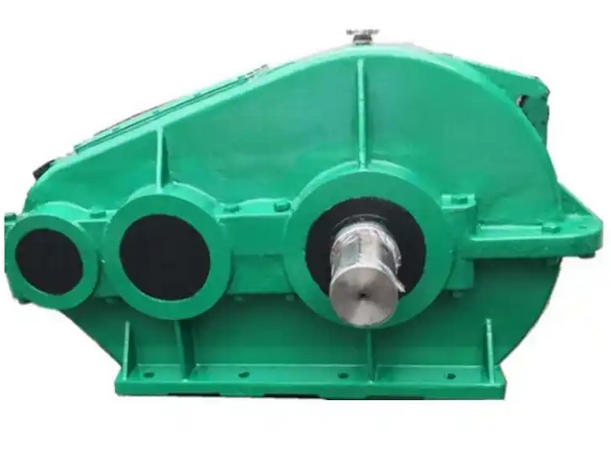
ZQ200-12.64-2 belongs to the ZQ series soft tooth surface reducer, which follows the standard of "JB/T 8853-2001 Cylindrical Gear Reducer". Failure to meet the installation accuracy standards can lead to equipment performance degradation, component damage, as well as production and safety risks. The specific consequences are as follows:
1. The performance of the equipment deteriorates sharply during operation
Noise and vibration significantly exceed the standard: The normal operating noise of this type of reducer is usually ≤ 75dB. If the coaxiality deviation of the shaft system exceeds the standard value of 0.05mm during installation, or the gear meshing contact spot deviates from the middle of the tooth surface, it will cause the operating noise to suddenly rise to above 85dB. At the same time, the vibration will also intensify, with an amplitude exceeding 0.1mm, which not only affects the comfort of the operating environment, but also deteriorates the feel of the equipment during operation, making it difficult to transmit power smoothly. When the axial deviation is too large, periodic impact vibration will occur, and abnormal gear meshing will be accompanied by irregular vibration noise.
Significant decrease in transmission efficiency: Insufficient gear meshing accuracy, such as tooth flank clearance deviation exceeding 0.05mm, will increase energy loss during gear transmission; The additional friction caused by the installation deviation of the shaft system will further reduce the transmission efficiency. When the accuracy is seriously below the standard, the transmission efficiency will decrease by 5% -10%, which means that to achieve the same output power, more electricity is required, and in the long run, it will significantly increase the production energy consumption cost.
2. Accelerated damage to core components and shortened equipment lifespan
Gears are prone to wear and fracture: During installation, if the meshing contact spots of the gears do not cover more than 60% of the qualified standard of the tooth surface, or if the parallelism deviation of the gear shaft occurs, it will cause uneven force on the tooth surface, resulting in biased load and rapid wear problems such as pitting and peeling. Over time, wear and tear will continue to intensify, ultimately leading to tooth breakage. Compared to installing qualified equipment, the lifespan of gears in such situations will be shortened by 30% -50%.
Bearing premature failure: If the clearance adjustment error of the bearing exceeds ± 0.02mm during installation, or if the raceway is deformed due to hard tapping of the bearing with a hammer during assembly, it will cause severe heating of the bearing during operation, with a temperature exceeding the normal threshold of 80 ℃. Tight clearance can easily cause bearing jamming, while loose clearance can exacerbate vibration and impact. In either case, it can shorten the bearing life by 40% -70%, and in severe cases, equipment stoppage may occur due to bearing jamming.
Damage to the box body and sealing components: If the flatness deviation of the box body surface is too large, or if the anchor bolts are not tightened diagonally, it will cause deformation of the box body. This not only destroys the installation benchmark of the internal shaft system and gears, but also deteriorates the sealing fit of the box surface, causing lubricant leakage. When the coaxiality of the oil packaging exceeds 0.1mm, it will accelerate the wear of the oil seal lip, further exacerbating the leakage problem. The leaked lubricating oil will also cause internal components to dry up due to lack of oil, forming a vicious cycle.