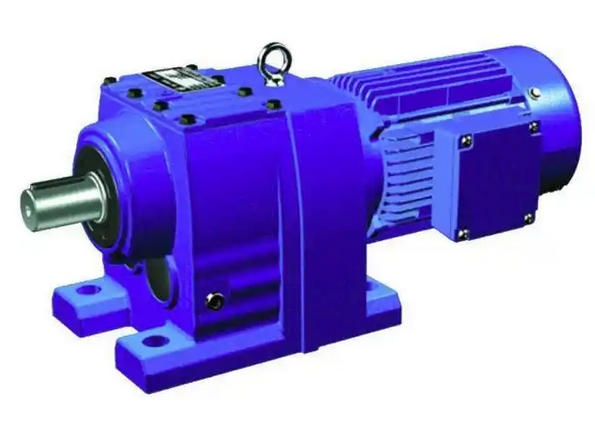
How to determine whether the abnormal noise of R27-4.27-1.5KW gear reducer is caused by assembly accuracy deviation
If the abnormal noise of R27-4.27-1.5KW gear reducer is caused by assembly accuracy deviation, it is usually accompanied by specific acoustic characteristics and operational performance. According to technical analysis, assembly accuracy deviation is one of the common causes of abnormal noise in such reducers, especially in the early stages of operation after new installation or maintenance. The following are specific methods and criteria for determining whether it is caused by assembly accuracy issues:
1、 Preliminary judgment based on noise characteristics
The noise caused by assembly accuracy deviation has identifiable acoustic patterns, which can be preliminarily located based on the operating status:
Periodic impact sound or "clang" sound
If the noise presents intermittent and rhythmic "clanging" sounds, especially during start-up or load changes, it may be caused by uneven gear mesh clearance or poor shaft alignment. This sound is usually caused by the gear axis not being parallel or the center distance deviation, resulting in repeated impacts on the local tooth surface.
High frequency sharp whistling
If the sharp noise increases with the increase of speed, it may be related to the excessive preload of the bearing and the small axial clearance, which is typical of improper adjustment during assembly.
Low frequency vibration roar
The resonance or low-frequency buzzing of the whole machine is often related to loose anchor bolts and uneven installation of the box, which leads to a decrease in structural stiffness and amplifies the original vibration.
2、 Verify assembly issues through external status checks
Under non-stop or simple inspection conditions, assembly deviations can be investigated through the following methods:
Check the alignment status of the coupling
Use a dial gauge or laser centering device to measure the coaxiality of the input/output shaft with the motor and load equipment. The R series reducer requires a radial deviation of ≤ 0.05mm and an end face deviation of ≤ 0.03mm/m. If it exceeds this range, it is highly likely to cause uneven force on the shaft system, leading to abnormal noise.
Check the installation levelness and foot fastening
Check the reducer base with a spirit level to ensure that the horizontal deviation is less than 0.1mm/m. At the same time, confirm that the anchor bolts have been tightened to the rated torque in diagonal order to avoid damaging the internal meshing accuracy due to deformation of the box.
Observe the vibration situation during operation
If the vibration is significant (>0.08mm/s in the horizontal direction) when using a tactile or simple vibration meter to detect the bearing seat, it should be suspected that there is a problem with the shaft alignment or bearing installation.
3、 Confirm assembly defects through internal disassembly inspection
If the external investigation fails to eliminate the problem, further disassembly and inspection of the internal assembly status are required:
Gear mesh clearance detection
Measure the tooth flank clearance using lead pressure method or dial gauge method. The standard mesh clearance of R27 model is usually 0.05~0.10mm. If the measured value deviates from this range, it indicates that there is a deviation in the installation depth or axial positioning of the gear.