What are the reasons why the oil temperature of the worm gear box of WPDX120-60-2.2KW worm reducer is too high?
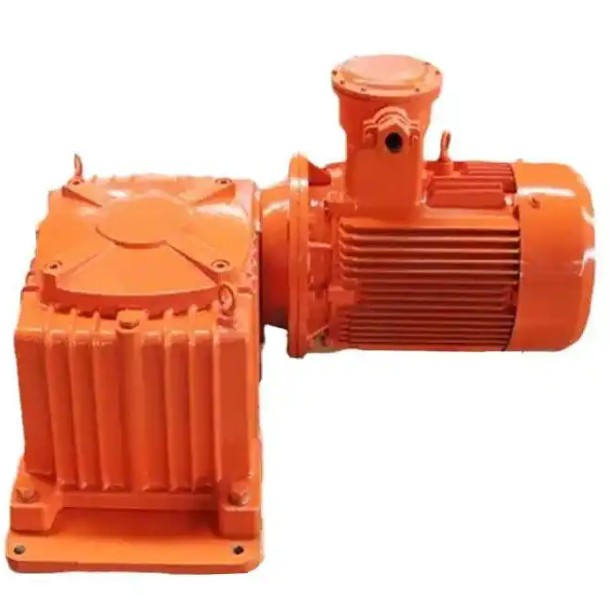
The WPDX120-60-2.2KW worm gear reducer is equipped with a 120 machine base, a 60 speed ratio, and a 2.2KW low-power configuration. High oil temperature in the worm gear box (oil temperature exceeding 80 ℃/shell temperature rise exceeding 40 ℃) is a common problem in this type of high speed ratio model. The core reason is that the sliding friction of the worm gear meshing surface causes large losses, and the heat cannot be dissipated in a timely manner after abnormal lubrication, assembly, components, working conditions, heat dissipation and other links are added. The specific reasons are divided into six categories, including exclusive adaptation problems of this model, and there is no redundant information:
1. Abnormal lubrication system (the most common cause)
Improper filling of lubricating oil: Excessive oil level leads to increased stirring resistance and additional frictional heat; The low oil level prevents the formation of a complete oil film on the mating surface and bearings, and the dry/semi dry friction intensifies heat generation. The oil level of this model needs to be strictly maintained at 1/2-2/3 of the oil level window.
Incorrect selection of lubricating oil: L-CKE/P extreme pressure worm gear special oil was not used, and ordinary gear oil/machine oil was used instead, resulting in insufficient oil film strength; Or viscosity adaptation errors, selecting high viscosity at low temperatures and low viscosity at high temperatures, all lead to lubrication failure.
Lubricating oil aging pollution: Oil oxidation, emulsification, blackening, or mixing with dust, metal debris, and moisture, resulting in a sudden drop in lubrication performance, an increase in friction coefficient of the mating surface, and dual intensification of heat generation due to abrasive wear.
Excessive addition of bearing lubricating grease: Excessive grease at the bearing end cap generates heat during operation, which is then transferred to the overlapping mating surface of the housing.
2. Assembly accuracy deviation (common cause after installation/maintenance)
The meshing clearance between the worm gear and worm wheel is too small: the side clearance is not adjusted according to the standard (the standard side clearance of this model is 0.15-0.3mm), or the clearance interference occurs after wear, the contact area of the meshing surface is too large, and the sliding friction resistance increases sharply.
Center distance/parallelism deviation: The deviation of the center distance between the worm shaft and the worm gear shaft, as well as the mismatch of the parallelism between the two shafts, result in biased meshing, only local tooth surface contact, stress concentration, and a significant increase in frictional heat.
Tight installation of bearings/seals: Excessive interference between the inner ring and shaft, outer ring and end cover of the bearing, or tightening of the bearing clearance, increases rolling friction resistance; The oil seal is pressed too tightly, and the friction between the lip and the shaft neck generates heat and transfers it to the housing.
The motor and reducer are not concentric: the coaxiality of the coupling and the circular runout of the end face exceed the tolerance, the worm shaft is subjected to radial force, the worm gear is biased and engaged, and the coupling transmits torque, generating additional frictional heat.
3. Wear/failure of transmission components (core cause after long-term use)
Wear and bonding of worm gear tooth surface: The tin bronze tooth surface of the worm gear shows pitting, peeling, and bonding, or the quenched layer of the worm gear tooth surface is worn and exposed. The roughness of the meshing surface increases, and the sliding friction coefficient increases exponentially. At high speed ratios, the relative sliding speed is faster and the heat generation is more significant.
Bearing wear and stagnation: The bearing raceway and rolling elements are worn and eroded, and the operation changes from rolling friction to sliding friction, resulting in a significant increase in heat generation, accompanied by abnormal noise and vibration in the bearing parts.
Loose fit between worm gear and output shaft: The keyway between the worm gear hub and shaft is worn, and the interference fit is ineffective. During operation, the worm gear moves/slips in the circumferential direction, generating additional frictional heat.