How to judge the sealing and internal status of H series reducer bearings based on appearance and leakage situation
The bearing sealing and internal condition of the H series reducer can be preliminarily judged through visual inspection and leakage, and potential faults can be effectively identified by combining abnormal performance during operation. The following is a systematic judgment method:
1、 Judging the bearing and sealing status through appearance features
1. Aging or damage of shaft end seals
Hardening and cracking of the lip of the skeleton oil seal: After removing the protective cover, observe the shaft end seal. If the rubber material becomes hard, loses elasticity, or shows small cracks (especially in humid and high-temperature environments), it indicates that the seal has failed.
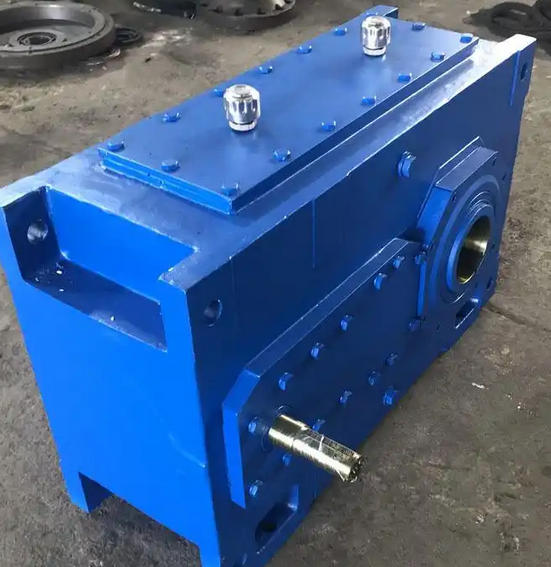
Mechanical seal dynamic/static ring wear: For heavy-duty models equipped with mechanical seals, if slight oil leakage is found at the output shaft seal, scratches, wear or deformation of the dynamic and static ring surfaces can be seen after disassembly and inspection, and the entire set needs to be replaced.
2. Leakage at the junction surface and end cover of the box body
Joint surface oil leakage: If there is "oil film diffusion" or "oil dripping into lines" on the parting surface of the gearbox body, and the fastening bolts have been tightened according to the torque, it may be due to deformation of the joint surface or failure of the sealant, which needs to be scraped and repaired or re coated.
Bearing end cap oil leakage: Loose end cap bolts or aging and cracking of sealing gaskets can cause oil leakage; If the end cap itself has wear or scratches on the shaft neck, the shaft needs to be repaired or the end cap needs to be replaced.
3. Blockage of ventilation cap leads to pressure imbalance
Phenomenon: When the temperature of the box rises, the internal air pressure cannot be released, causing "oil spraying" or "intermittent oil leakage" when the sealing element is pushed open.
Inspection method: Remove the ventilation cap and blow the filter element with compressed air.
2、 Reverse infer internal operating status based on leakage situation
3、 Comprehensive assessment of internal health based on operational status
Even if there is no obvious leakage on the appearance, the following operating characteristics indicate potential hazards in the bearing or sealing system:
1. Abnormal vibration and noise
The hand feels "periodic shaking" and the frequency is consistent with the output shaft speed, indicating bearing raceway wear;
After hearing a "rustling" friction sound or a "clanging" impact sound and ruling out gear meshing issues, it can be determined that the bearing cage is broken or the ball is peeling off.
2. Abnormal temperature rise
The temperature of the output bearing is more than 15 ℃ higher than the normal value, and excluding factors such as low oil level and poor heat dissipation, it is highly likely that the bearing wear is causing frictional heat generation;
Infrared temperature measurement shows local hotspots (>90 ℃), and the machine should be stopped immediately for inspection to avoid burning.
3. Excessive axial movement
Push and pull the output shaft along the axial direction by hand. If the displacement exceeds 0.2mm (for deep groove ball bearings), it indicates that the bearing clearance has widened due to wear or that the inner ring and shaft fit are loose, and disassembly verification is required.